Cut Like a Chef: How to Master Knife Skills and Precision

Cut Like a Chef: How to Master Knife Skills and Precision
A sharp knife and a steady hand are the foundation of great cooking. Whether you’re dicing onions, slicing meat, or chopping vegetables, it’s not about brute force—it’s about technique, rhythm, and precision. With the right grip and motion, you can work faster, safer, and with results that look and taste better. Here’s your guide to cutting like a professional chef in your own kitchen.
Choose the Right Knife for the Job
Professional chefs rarely rely on just one knife. Each type has a specific purpose, making your work easier and more accurate.
- Chef’s knife – the most versatile and essential. Perfect for everything from vegetables to meat.
- Paring knife – small and light, ideal for peeling, trimming, and cutting small fruits and vegetables.
- Serrated knife – with a saw-like edge, great for bread, tomatoes, and other foods with a tough exterior and soft interior.
- Boning or fillet knife – narrow and flexible, designed for fish and meat where precision matters.
Invest in a few high-quality knives and keep them sharp. A dull knife requires more force and increases the risk of slipping and cutting yourself.
How to Hold Your Knife Correctly
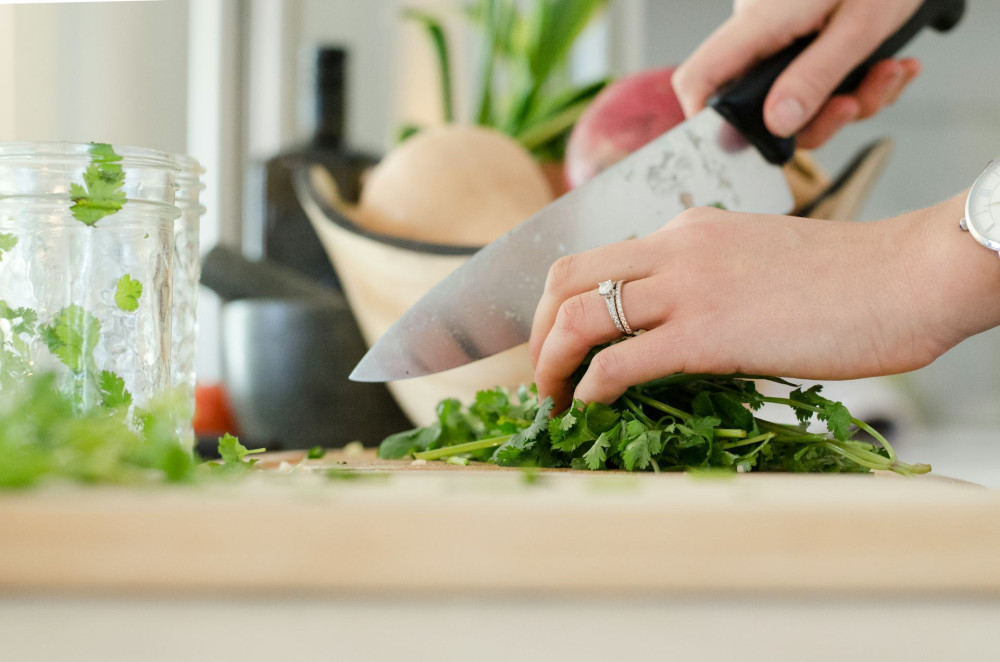
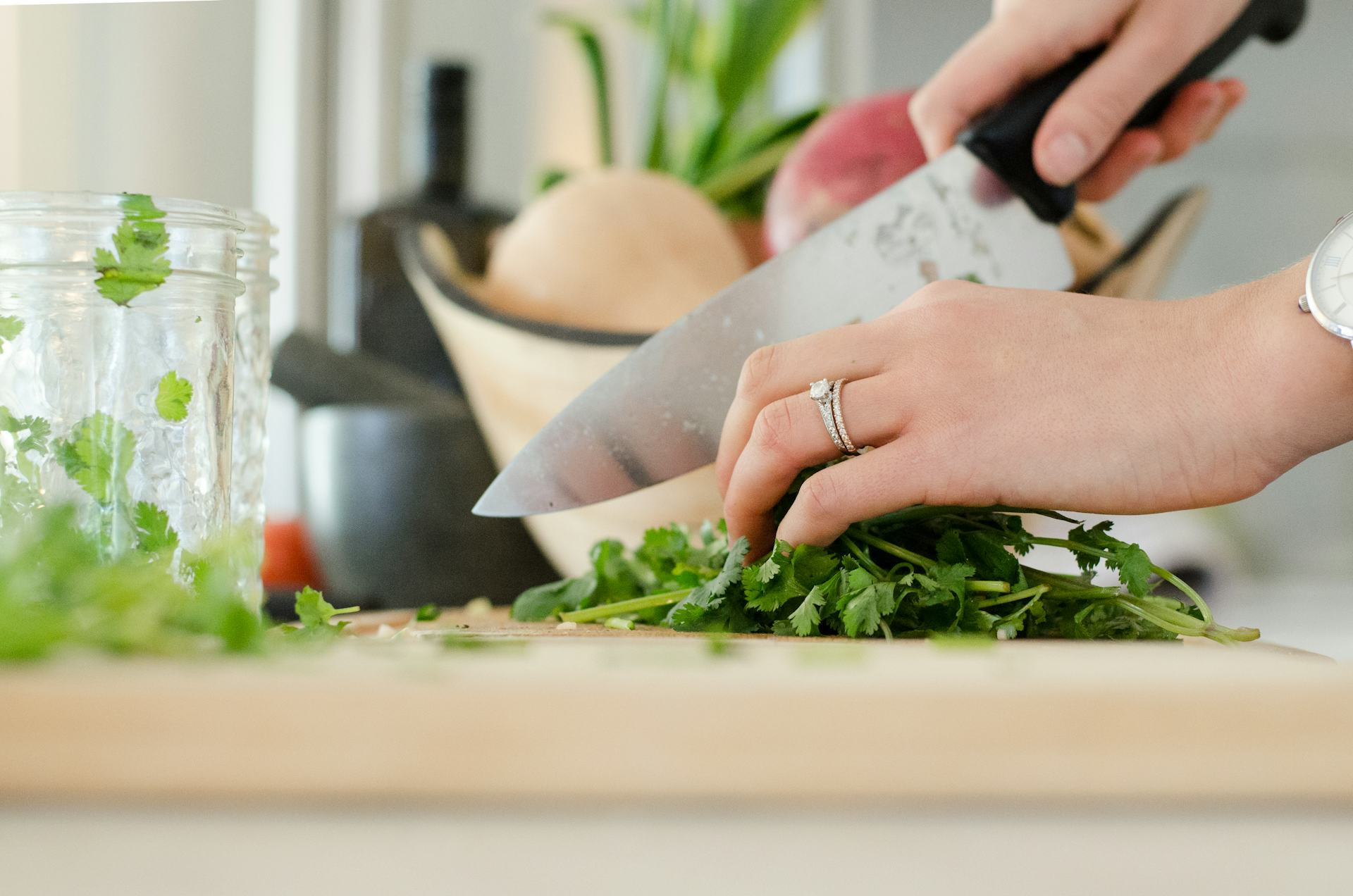
Many home cooks hold a knife like a pencil—but that limits control. The professional grip is to wrap three fingers around the handle and place your thumb and index finger on either side of the blade, just above the handle. This gives you better balance and stability.
Your other hand is the guiding hand. Curl your fingers slightly inward so your knuckles form a “wall” for the knife to glide against. This protects your fingertips and helps you cut evenly.
Basic Cutting Techniques
There are countless ways to cut, but a few core techniques cover most everyday cooking tasks.
- Chopping – for onions, herbs, and vegetables. Keep the knife tip in contact with the cutting board and move the blade up and down in a rhythmic motion.
- Slicing – for thin, even cuts of items like cabbage or leeks. Use long, smooth strokes instead of pressing down.
- Dicing – start by slicing, then cut into strips, and finally across to create uniform cubes. Even pieces cook more evenly.
- Filleting – requires patience and a flexible knife. Follow the bones or skin closely and let the knife do the work.
Practice slowly and deliberately—speed will come naturally with repetition.
Læs også:
Keeping Your Knives Sharp
A sharp knife isn’t just more efficient—it’s safer. A dull blade is more likely to slip and cause injury.
- Use a honing steel regularly to keep the edge aligned.
- Sharpen your knives with a whetstone or have them professionally sharpened a few times a year.
- Hand wash only—dishwashers can dull blades and damage handles.
- Store knives properly, in a knife block or on a magnetic strip, to prevent them from knocking against other utensils.
A few minutes of maintenance can extend your knife’s life for years.
Work Safely and Efficiently
A good cutting board is almost as important as the knife itself. Choose a sturdy board made of wood or plastic, and place a damp towel underneath to prevent slipping. Always stay focused, especially when working quickly.
Cut with smooth, controlled motions and avoid using excessive force. If you feel resistance, it’s usually a sign your knife needs sharpening.
When you’re done, scrape ingredients off the board with the back of the knife, not the sharp edge. This protects the blade and keeps it sharp longer.
Practice Like a Pro
Knife skills, like any craft, take practice. Start with simple exercises: dice onions into even cubes, slice carrots into thin rounds, or try making julienne strips. Repeat the motions until they feel natural.
You can also take a cooking class focused on knife skills—many community centers, culinary schools, and kitchen stores across the U.S. offer them. It’s a great way to build confidence and learn from professionals.
Precision Makes Better Food
When you master knife technique, cooking becomes not only faster but more precise. Evenly cut vegetables cook uniformly, meat sears more beautifully, and your dishes look more refined.
In the end, cutting like a chef is about respect for your ingredients. A good knife and a confident hand can transform even the simplest meal into something that looks—and feels—like true culinary craftsmanship.
Læs også: